

South Asian Event Fashion: The Ultimate Guide to Looking Amazing at Every Desi Event
STYLE & CULTURE · GUIDE
When it comes to South Asian event fashion, most people think they need a brand-new outfit for every celebration. The reality is very different.
Let’s be honest about the panic first.
It’s 9 PM, the group chat is blowing up with “what are you wearing tomorrow,” and you’re scrolling Instagram watching someone’s cousin’s cousin twirl in a mirror-work lehenga that probably cost more than your rent. Meanwhile your closet is just… there. Existing. Judging you.
Here’s the thing nobody tells you before your first Diwali party, first Navratri night, first big fat South Asian wedding season in Canada: the outfit anxiety is almost never about the outfit. It’s about walking into a room full of aunties, uncles, and impossibly put-together twenty-somethings and wondering if you’ll belong.
Good news – you already do. The clothes are just the easy part once you know the rules nobody’s actually written down. So we did it for you.
01 · TREND
The Ambani Effect: How It Changed South Asian Event Fashion
Remember 2024, when the entire internet collectively lost its mind over the Ambani wedding? Every handwoven saree, every embroidered jacket, every impossibly detailed lehenga got dissected online for weeks.
You’d think that kind of spectacle would send everyone running to out-spend each other at the next community event. It did the opposite.
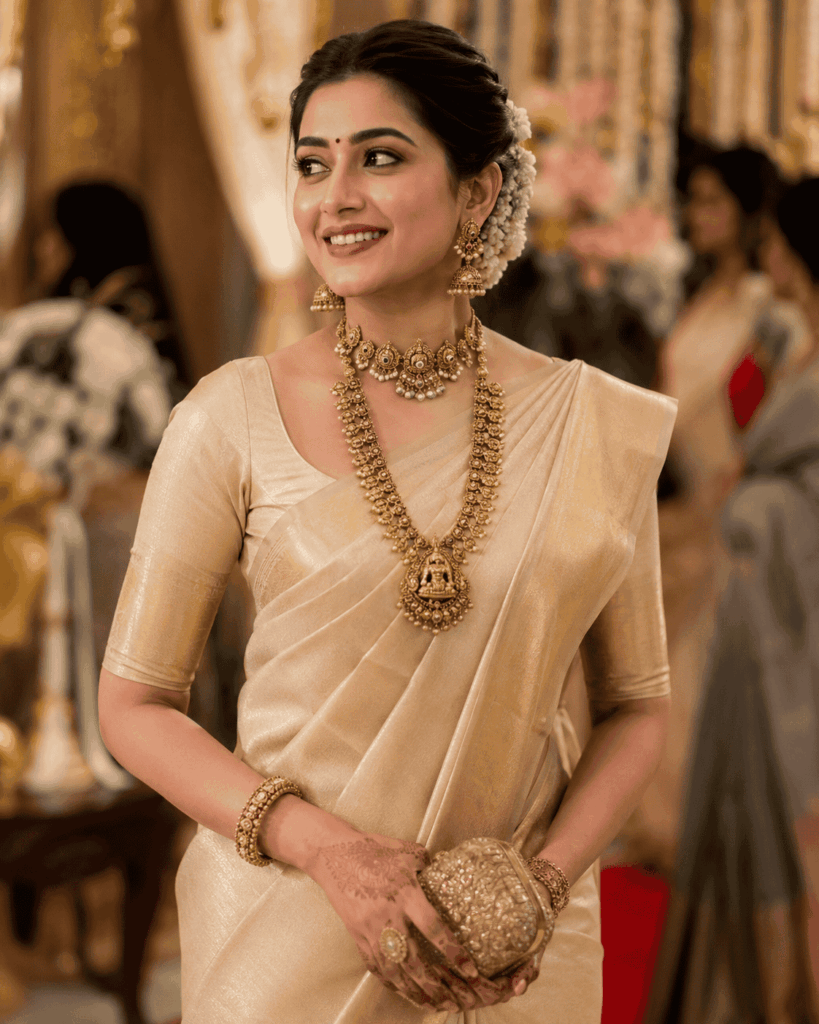
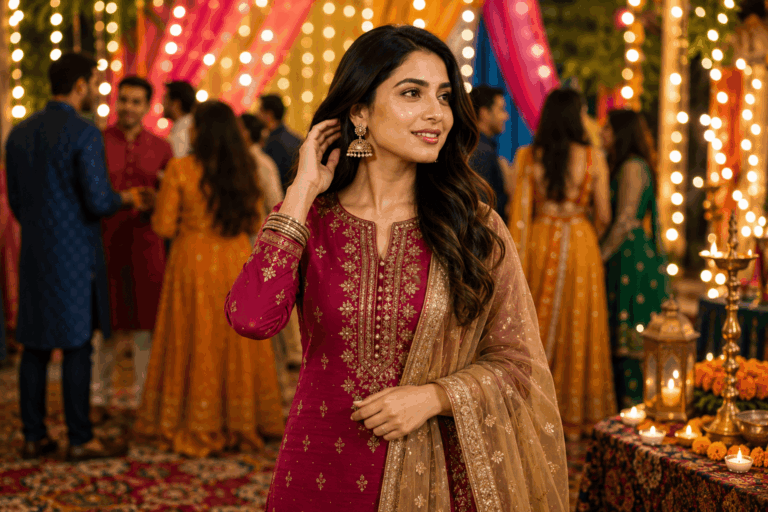
Once the confetti settled, something quieter took over: people started caring about craftsmanship again, not costume. Handloom over flash. Silhouettes that actually flatter over silhouettes that scream “I paid a lot for this.” A simple silk saree with your grandmother’s jewellery now turns more heads at a Toronto banquet hall than an outfit dripping in sequins.
Translation: the question shifted from “how much did that cost?” to “okay wait, that’s actually so you.” That’s the energy to chase.
02 · REPEAT
Repeat It. Nobody’s Counting. That’s the New South Asian Event Fashion
There was a time – you know the one – when wearing the same outfit twice felt like a fashion crime punishable by group chat side-eye. Social media convinced an entire generation that every single event demanded a brand new look, receipts required.
That era is dying, and honestly, good riddance.
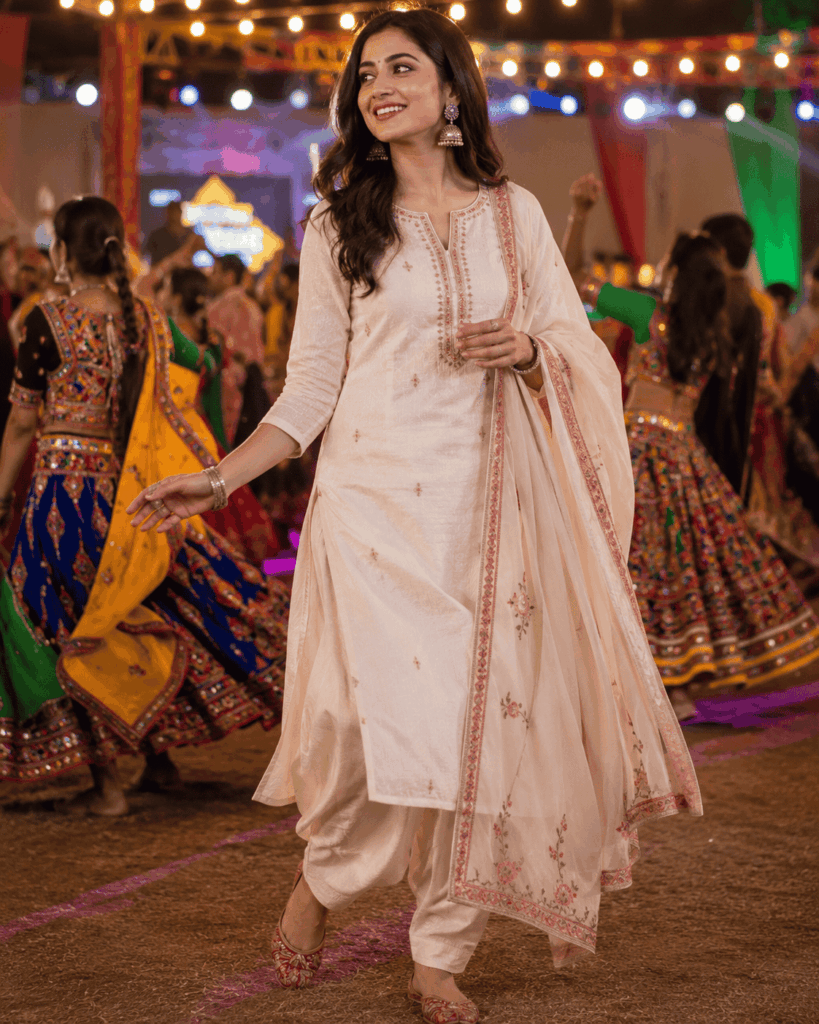
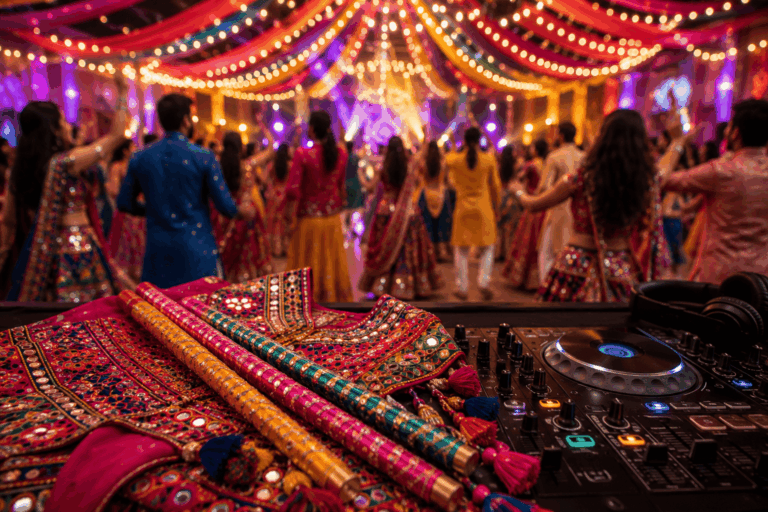
One ivory kurta set can quietly live four different lives. Silver jewellery and simple styling for a low-key community dinner. A punchy Bandhani dupatta thrown over it for Navratri. Statement jhumkas swapped in for Diwali. A cropped embroidered jacket layered on top for your cousin’s wedding.
Nobody’s going to clock it’s the same base outfit. And the people having the best time at these events genuinely aren’t tracking who wore what last year. They’re too busy dancing.
03 · ESSENTIAL
Your One Non-Negotiable Purchase: The Modern Salwar Suit
If you’re starting from scratch, skip the heavy lehenga. Go straight for a well-cut salwar suit – but not the stiff, structured version your mom’s generation grew up wearing.
Think clean-lined kurtas, relaxed trousers, and fabrics built for real Canadian life: breathable cottons, soft Chanderi, linen blends, airy mulmul. Something you can actually dance Garba in without overheating in a packed banquet hall.
This is the outfit that shows up for you at Navratri, Diwali, temple visits, family dinners, community mixers, and cultural festivals alike. One purchase, six occasions. That’s not just smart shopping – that’s the whole point.
04 · COMMUNITY
The Community Closet Is Real (And It’s Iconic)
Here’s something first-timers rarely clock: South Asian wardrobes have always been a little bit communal, and 2026 is leaning into it harder than ever.
Your friend lends you her bangles. Someone’s aunt hands over a gorgeous silk stole “just for the night.” Your cousin comes back from a trip to India with jewellery she swears will change your whole look – and she’s right.
The people who consistently look the most put-together at these events aren’t buying a new outfit every season. They’re investing in the pieces that transform what they already own: one embroidered dupatta doing triple duty across three different looks, a pair of handcrafted jhumkas that work with basically everything, a potli bag that instantly upgrades the simplest kurta.
Small details, big compliments. Every time.
05 · STYLE
Coordinated, Not Costume-y
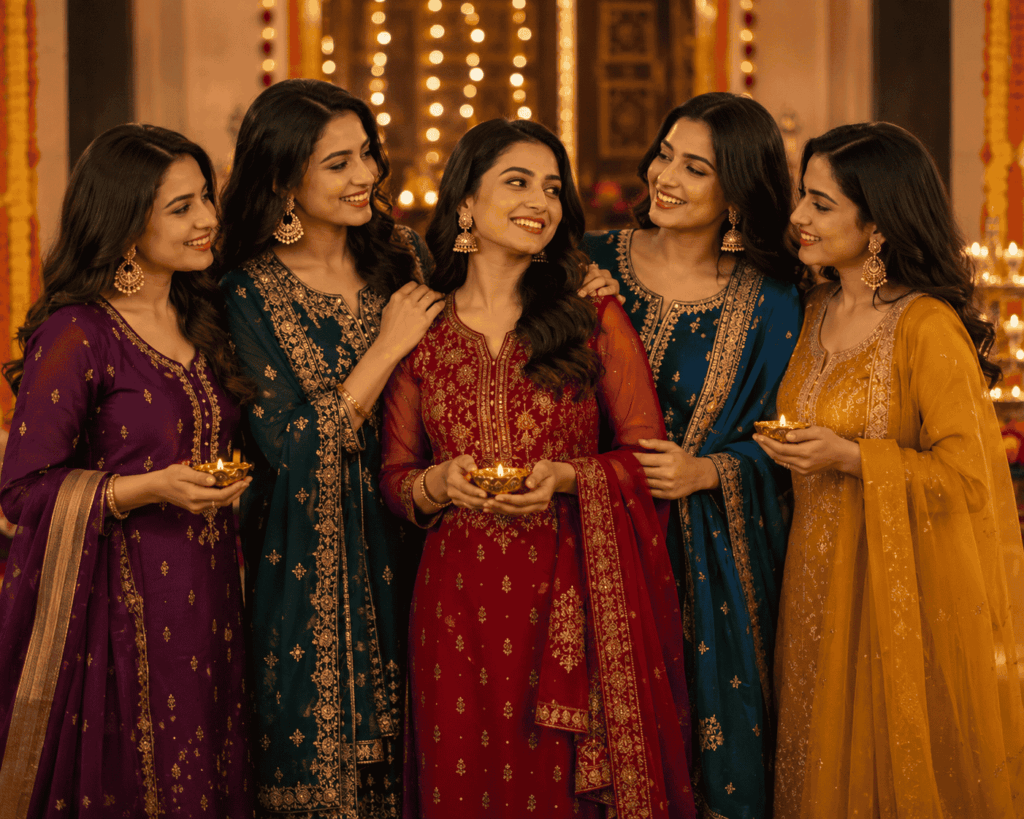
Group photos hit different when everyone’s colour palette is intentional without looking like a matching set from a catalogue. This is the coordinated-not-identical trend taking over event group chats right now.
Maybe your friend group lands on earthy tones – rust, mustard, olive, terracotta. Maybe it’s jewel tones – emerald, navy, plum, wine. Everyone still shows up in their own silhouette: one friend in a saree, another in a co-ord set, someone else in a sharara. The photos come out looking curated, not costumed – and honestly, it’s one of the easiest ways to make a night feel a little more special.
06 · COMFORT
Can We Talk About Shoes For A Second?
Nobody warns you about this part, but your shoes will quietly decide how much fun you actually have.
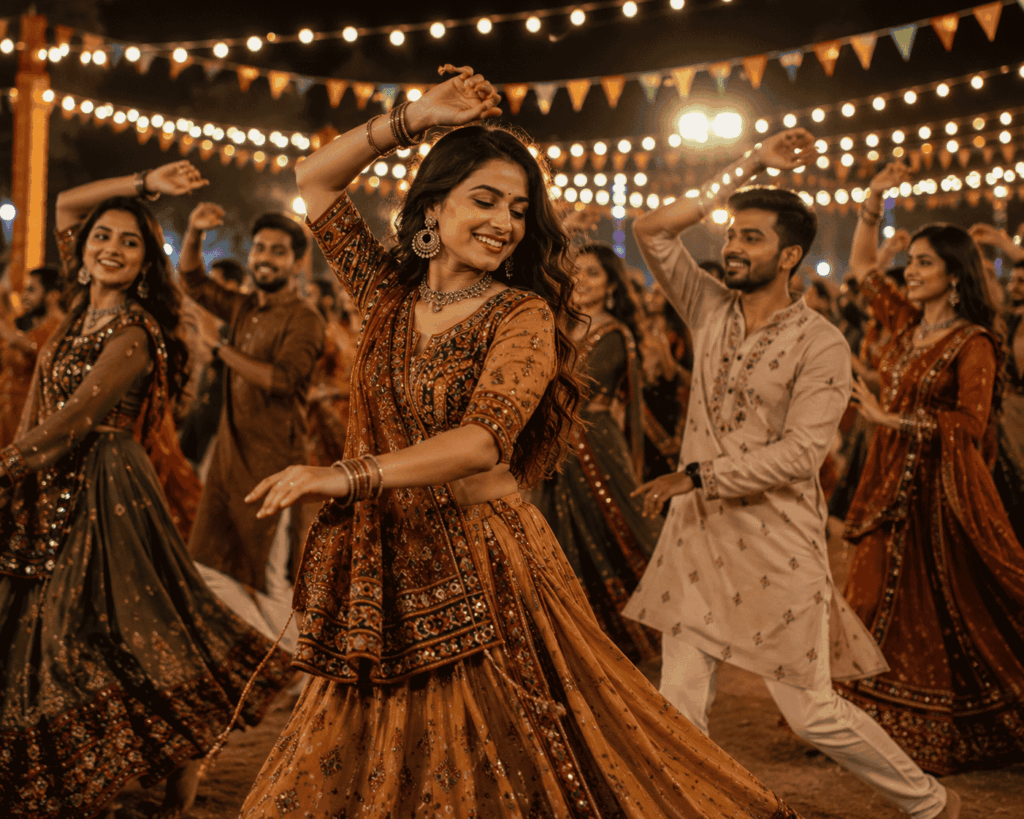
Think about what the night really involves – hiking across a parking lot, standing in a registration line, dancing Garba for hours, chasing down friends for one more group photo, going back for seconds at the food table. The most beautiful heels in the room mean nothing if they’ve got you limping by hour two.
Comfort has become genuinely fashionable, and it shows: embroidered juttis, stylish block heels, platform sandals, elegant flats, and yes – clean white sneakers paired confidently with a kurta. Five years ago someone might’ve raised an eyebrow. Now they’re asking where you got them.
07 · FABRIC
Fabric Is The Real Flex
Ask anyone who’s been doing this a while and they’ll tell you: the first question isn’t “how much embroidery,” it’s “what’s the fabric.”
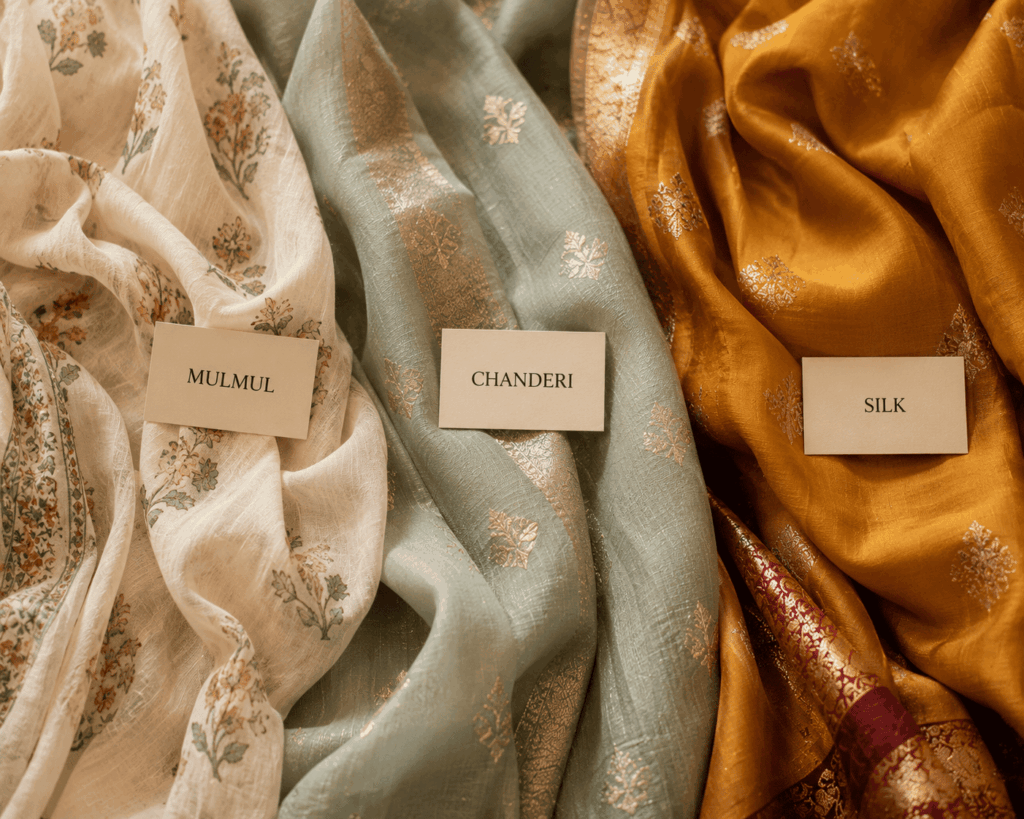
Because Canadian event weather is its own beast – cool evenings, overheated banquet halls, outdoor performances, hours of dancing, all in one night. Breathable fabric is the difference between an outfit that photographs well and one that actually feels good to wear:
- Mulmul cotton – effortless comfort
- Chanderi – elegant, fluid drape
- Handloom cotton – ideal for daytime celebrations
- Silk blends – built for evening events
- Organza – festive, photo-ready texture
Heavy synthetics might look shiny under event lighting, but they get uncomfortable fast – and future-you will absolutely notice the difference.
08 · RENTAL
Renting Isn’t A Backup Plan Anymore – It’s The Move
Maybe the biggest shift in how Canadians are dressing for desi events in 2026 isn’t the clothes themselves – it’s how people are getting them.
Designer lehengas are increasingly rented rather than bought outright for a single wedding. Facebook Marketplace has quietly become a goldmine for festive outfits once wedding season wraps up. Some communities even run WhatsApp groups dedicated entirely to swapping ethnic wear before major festivals.
There’s zero shame in any of it anymore. Some of the most expensive-looking outfits at your next event were probably rented for the weekend – and honestly, that’s the smarter kind of fashion. Not more expensive. Just smarter.
09 · MENSWEAR
Menswear Finally Broke Free Of The Wedding Catalogue
For years, men’s festive fashion basically meant one look on repeat: white kurta, blue Nehru jacket, done. That era is officially over.
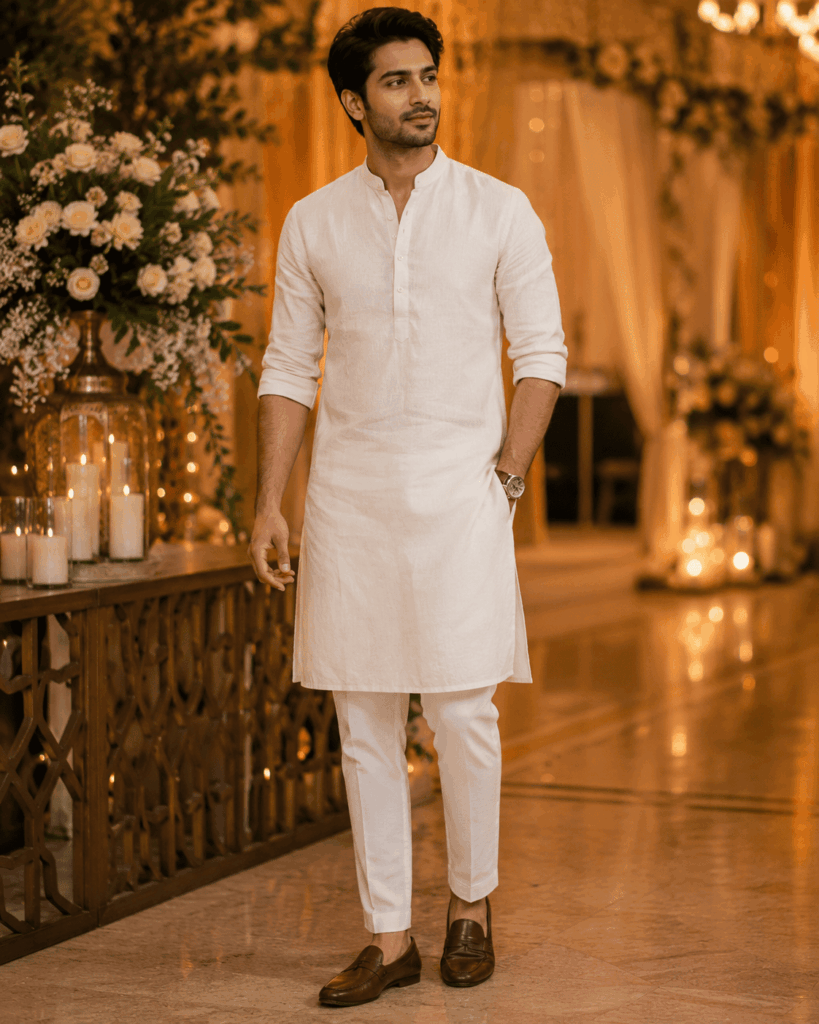
Today’s version is far more personal – monochrome linen kurtas, embroidered shirts paired with tailored trousers, palettes leaning olive, charcoal, and dusty beige, loafers replacing traditional juttis, and sneakers worn confidently with ethnic wear.
Nobody’s trying to look like they’re headed to a royal wedding. The goal is comfortable, modern, effortlessly put-together – and a well-fitted kurta will beat an overly ornate sherwani every single time.
10 · ETIQUETTE
If You’re Walking Into Someone’s Home, Bring Something Small
Heading to a Diwali gathering at someone’s house? A small gift goes a long way, and it doesn’t need to be expensive to land well: good mithai from a local sweet shop, a box of dry fruits, hand-painted diyas, premium loose-leaf chai, a handcrafted table runner, a festive candle holder. Thoughtful beats pricey, always.
11 · SHOPPING
Where To Actually Find All This Stuff
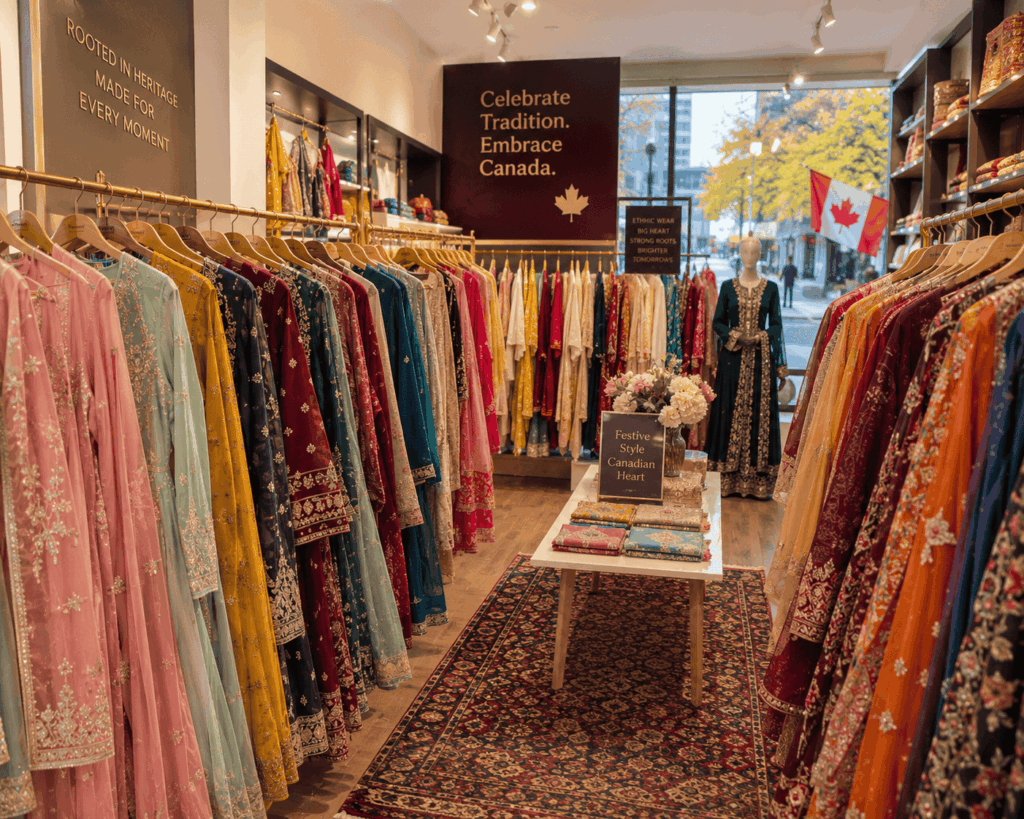
Knowing what to wear only solves half the problem. Here’s where people across Canada are actually shopping for it.
In the GTA, you’re spoiled for choice. Chandan Fashion has been a fixture in Toronto’s Little India since the 1980s (now also in Brampton) and covers everything from a first kurta set to a full wedding lehenga. Bombay Trendz in Mississauga is a go-to for festive pieces that feel current without designer pricing – especially popular through Navratri, Diwali, and engagement season. Kapoor Vastralaya is the pick for anyone who prefers a smaller, curated selection over sprawling showrooms. And Soch Canada’s first storefront, now open in Brampton, brings the same ready-to-wear kurtas and sarees you’d recognize from shopping trips to India – with far fewer alterations needed.
Shopping online has gotten a lot more dependable too, which matters if you’re nowhere near the GTA. Rithu.ca ships elegant kurta sets and sarees across the country. Desi Color Clothing covers budget-friendly ethnic wear that still feels put-together. BIBA Canada is the reliable pick for wearable fabrics and consistent sizing if you want something you’ll genuinely reach for more than once.
Outside Ontario, Surrey has become one of the country’s best South Asian shopping destinations, covering everything from everyday kurtas to full bridal wear. In Calgary, the boutiques along 32 Avenue NE get noticeably busier heading into Navratri and Diwali season – worth a visit if you’re shopping local.
Ordering from India directly still makes sense for very specific pieces, especially wedding wear. Hatkay and Utsav Fashion are diaspora favourites for a reason – both understand international shipping and keep ready-to-dispatch collections for customers abroad. If you’re going this route, order three to four weeks out to leave room for customs and any last-minute alterations.
And whichever route you take – don’t wait until the week of. The best colours, sizes, and styles vanish fast during festive season, and shopping early just buys you better choices and zero rush-shipping panic.
12 · TAKEAWAY
Here’s What You’ll Actually Remember
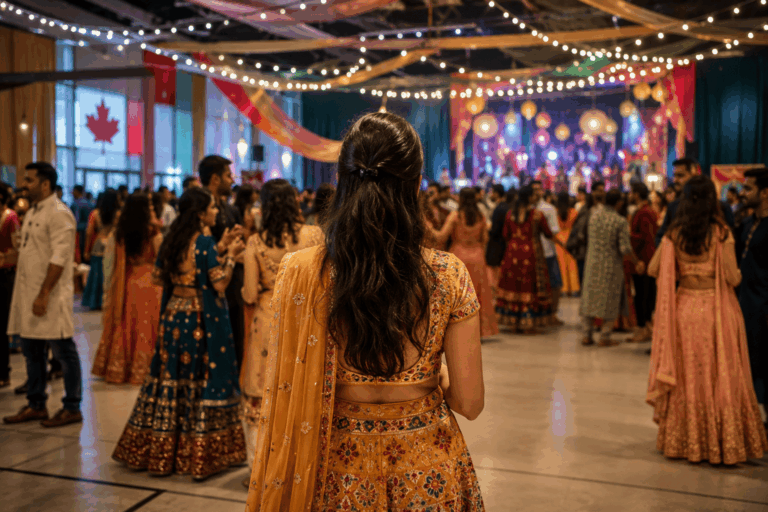
Twenty minutes into any South Asian event, nobody’s studying your outfit anymore. They’re asking where you’re from. Pulling you into the Garba circle. Saving you a seat at dinner. Laughing with you over chai like they’ve known you for years.
Months from now, you probably won’t remember the exact embroidery on your kurta. You’ll remember someone complimenting your earrings. You’ll remember dancing longer than you meant to. You’ll remember the conversation that turned a stranger into a friend.
The outfit’s just what gets you through the door with your shoulders back. Everything that actually matters happens after that.
So buy the piece you’ll happily wear five different ways. Borrow the dupatta. Rent the lehenga if that’s smarter. Wear the sneakers if your feet will thank you.
Looking for your next South Asian event? Browse JalsoLife to discover cultural festivals, Garba nights, Diwali celebrations, networking mixers, and community gatherings happening across Canada.
Frequently Asked Questions
Is it okay to wear the same outfit to more than one desi event?
Yes, and in 2026 it’s actually the norm. One well-chosen kurta set or salwar suit can be restyled with different jewellery, dupattas, and layers for Navratri, Diwali, and family dinners without anyone noticing the repeat.
What should I buy first if I’m building a festive wardrobe from scratch?
Start with a well-cut, breathable salwar suit rather than a heavy lehenga. It works across temple visits, community dinners, Navratri, and Diwali, which makes it the most versatile first purchase.
Is renting a lehenga instead of buying considered acceptable?
Absolutely. Renting designer lehengas and festive wear has become one of the most common ways Canadians dress for weddings and major events, and it’s viewed as smart rather than a compromise.
What fabrics work best for South Asian events in Canada?
Breathable options like mulmul cotton, Chanderi, handloom cotton, silk blends, and organza hold up best across cool evenings, warm banquet halls, and hours of dancing, while heavy synthetics tend to get uncomfortable fast.
Where can I shop for South Asian festive wear in Canada?
The GTA offers options like Chandan Fashion, Bombay Trendz, Kapoor Vastralaya, and Soch Canada, while Rithu.ca, Desi Color Clothing, and BIBA Canada ship nationwide. Surrey and Calgary’s 32 Avenue NE are strong choices outside Ontario, and Hatkay or Utsav Fashion work well for ordering directly from India.
What should men wear to a desi event now that trends have changed?
Modern menswear leans toward monochrome linen kurtas, embroidered shirts with tailored trousers, and earthy palettes like olive and charcoal, often paired with loafers or sneakers instead of a formal sherwani.


 Previous Post

