

COMMUNITY & CULTURE · GUIDE
Attending a South Asian Event in Canada: What No One Tells You
Maybe it’s been eight months since you left Ahmedabad. Or a year since you moved from Mumbai, Delhi, Bangalore, Surat, Chandigarh, or Baroda. The job is going fine. The apartment is finally starting to feel like home. You know which grocery store carries fresh methi and where to get decent chai on a Sunday afternoon.
Or maybe none of that describes you at all. Maybe you’ve been in Canada for fifteen years, or you were born and raised here, and Indian culture isn’t something you’re catching up on – it’s something you grew up with and still genuinely love. You go to Garba every year. You know the songs. You just want more of it in your life.
Wherever you fall on that spectrum, weekends can still feel surprisingly quiet.
Back in India, social life happened automatically. Family dropped in without planning. Friends called at the last minute. Festivals belonged to the entire neighbourhood. In Canada, even meeting people requires intention – whether you’ve been here two years or twenty.
So when you see a poster for a Garba night, Diwali celebration, or another South Asian event near you in Canada, you buy a ticket thinking it might be a nice way to reconnect with familiar culture, or simply to spend an evening surrounded by people like you.
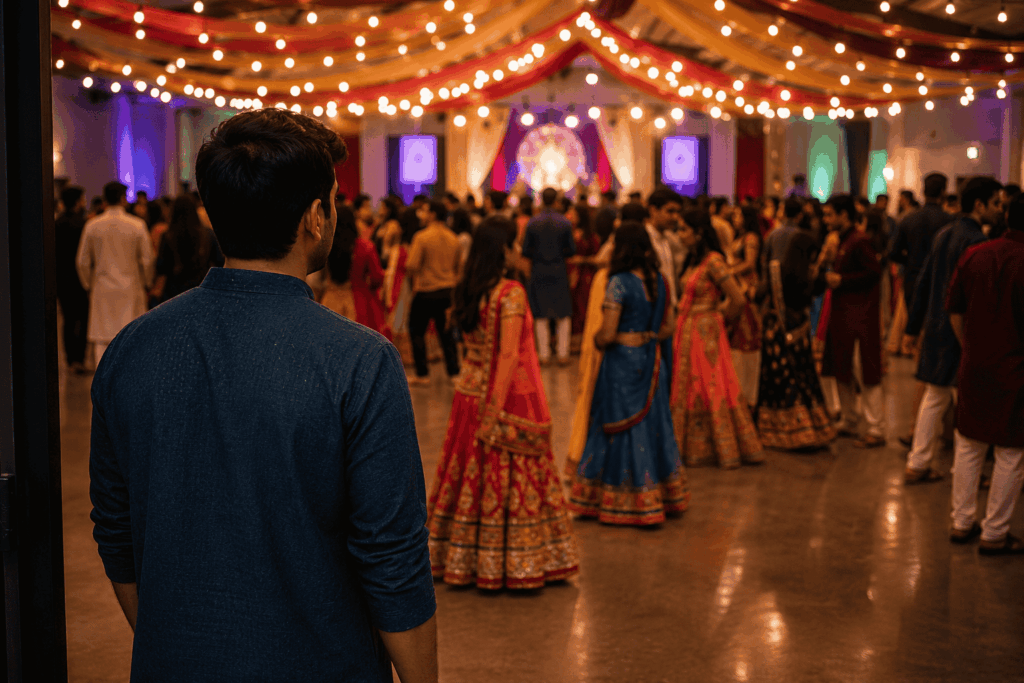
Then you walk into the venue and notice something unexpected.
Everyone seems to already know someone.
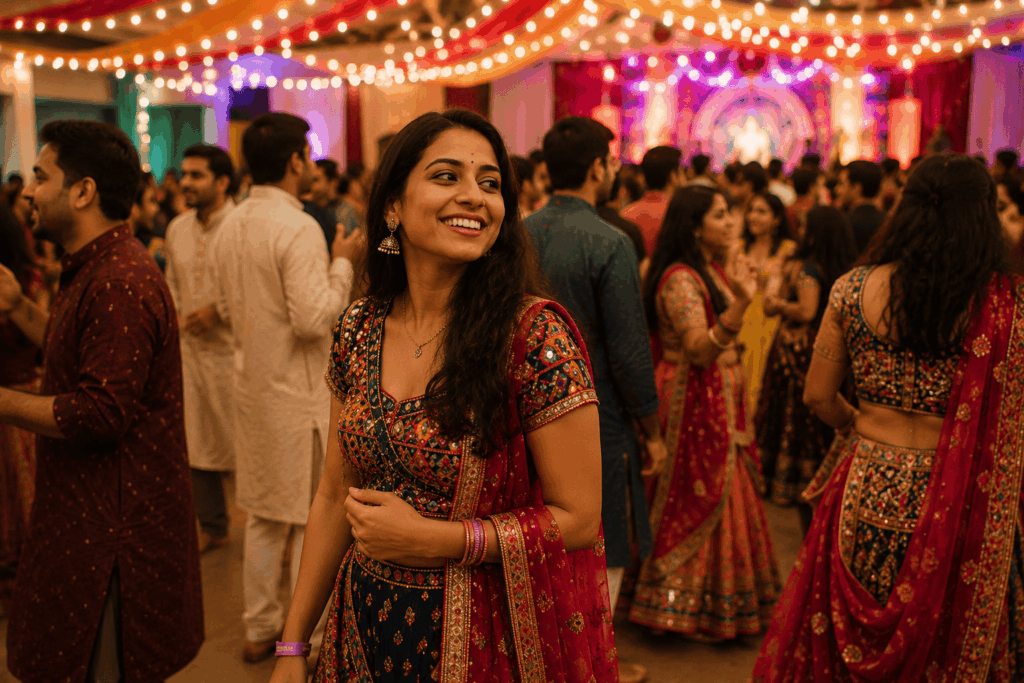
Small groups are laughing, aunties are greeting each other across the room, kids are running between families, and conversations are already in full swing. For a moment, you wonder if you’ve arrived late to a party that started years ago.
If that feeling sounds familiar, you’re not alone.
01 · IDENTITY
The Strange Feeling of Being Between Two Worlds
Many Indians who move to Canada in their twenties or thirties experience a kind of cultural confusion that rarely gets talked about openly.
When you visit home, relatives joke that you’ve become “too Canadian.” At work here, people often see you as the traditional Indian person in the room. And then you attend a South Asian event and somehow still feel slightly out of place.
That contradiction can be surprisingly emotional – and it isn’t unique to recent arrivals. Second-generation Indians often describe a version of the same thing: fluent in the culture, but still occasionally unsure where exactly they fit in a room full of people who each carry a slightly different version of “Indian.”
What makes it even more layered is that the culture celebrated at many South Asian events here can feel a little different depending on who built the community around it. A Garba night in Toronto or Calgary might feature songs, traditions, and habits that were common 15 or 20 years ago, carried over by an earlier wave of immigrants and passed down to their kids. For someone who just moved from a major Indian city, that can feel both familiar and unfamiliar at once. For someone who grew up here, it might be exactly the version of the culture they know best.
Neither version is more “correct.” It’s simply preserved differently, by different generations, for different reasons. Recognizing this early helps you relax instead of spending the night wondering why things feel slightly “off.”
02 · FIRST IMPRESSIONS
What Most First-Timers Notice Within 10 Minutes
- People arrive in groups. Many attendees come with cousins, roommates, coworkers, or family friends.
- Conversations switch languages constantly. English, Hindi, Gujarati, Punjabi, Tamil, Telugu, and Urdu may all appear within the same hour.
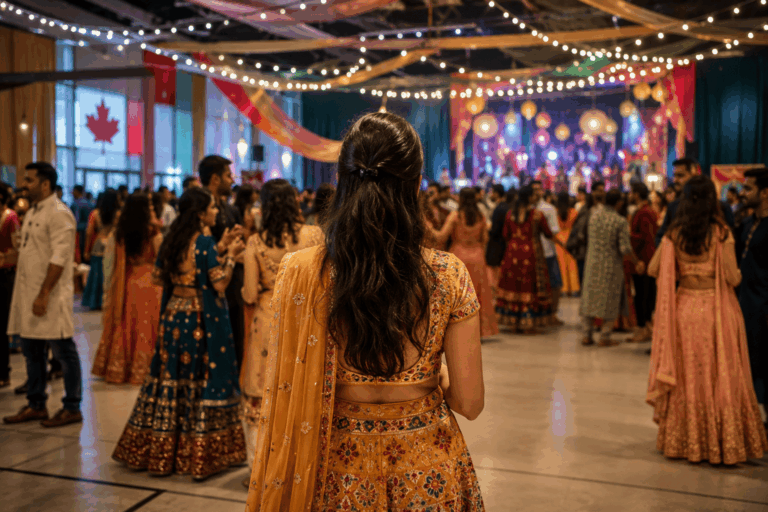
- The event is usually larger than expected. What looks like a small community gathering online can easily turn into hundreds or thousands of people.
- Nobody is paying as much attention to you as you think. Most people are busy finding food, greeting friends, watching performances, or keeping track of their children.
The hardest part is usually the first fifteen minutes. After that, the room starts feeling less intimidating – whether it’s your first event or your fifteenth.
03 · ETIQUETTE
A Practical Reality Check About Garba and Temple Events
This is the kind of information many people wish someone had told them before their first Navratri.
Not all Garba events follow the same rules. Community-organized dance nights are often relaxed. Temple-run or religious Garba events can be much more traditional. Some venues discourage black clothing inside the Garba circle. Others expect traditional Indian attire instead of Western wear. A few follow specific colour themes for each of the nine Navratri nights.
Before assuming anything, check the event page carefully or message the organizer directly. A two-minute question can save a lot of awkwardness at the entrance.
Also remember that shoes are usually left outside dance areas, and some religious venues have additional etiquette around photography, food, or entering prayer spaces.
04 · PRACTICAL
The Outfit Problem Nobody Warns You About
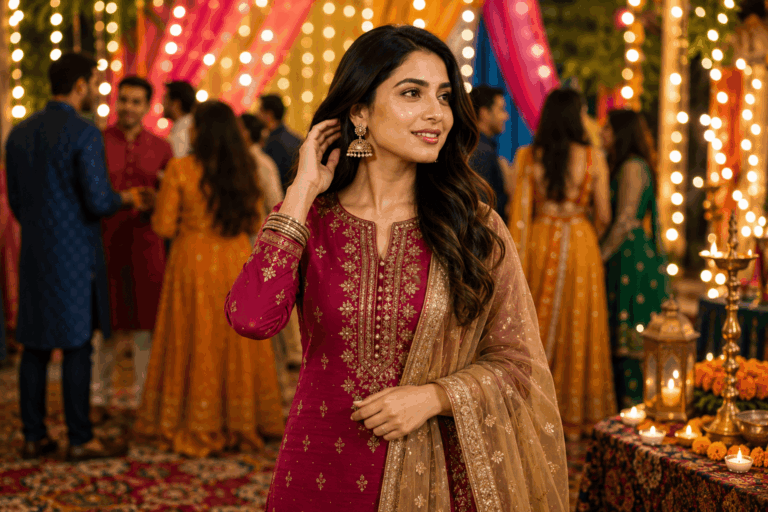
In photos, everyone looks effortless.
In reality, large South Asian events in Canada involve:
- Long walks from parking lots.
- Cold lobbies and hallways.
- Standing in registration lines.
- Hard ballroom or convention-centre floors.
- Three to five hours on your feet.
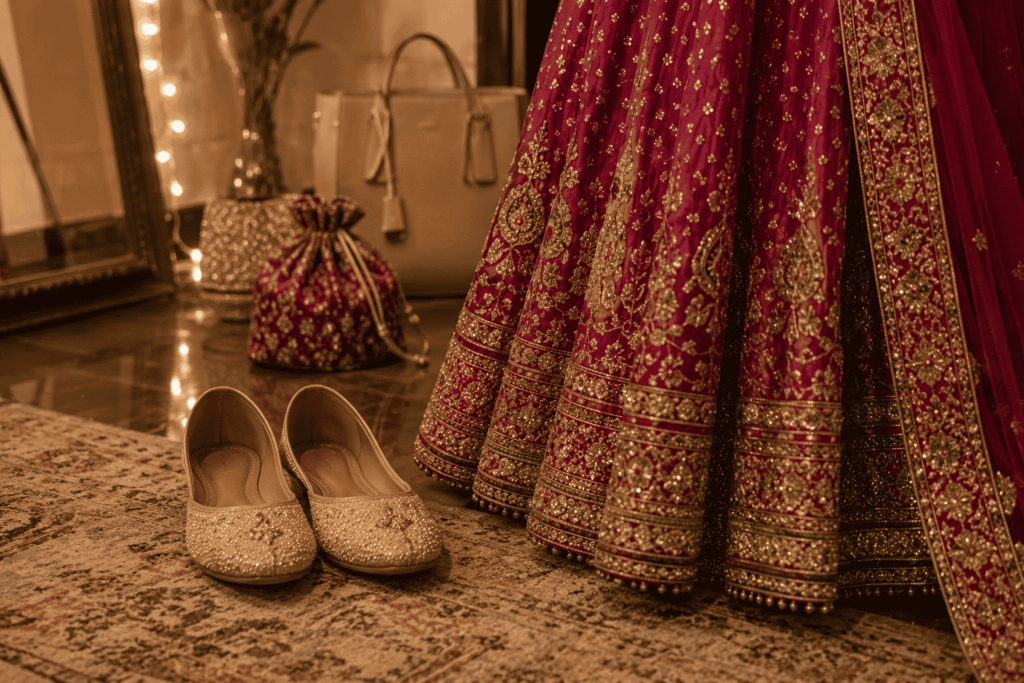
A lehenga and heels that feel perfect at 7:00 p.m. can feel very different by 10:30.
One of the most appreciated tips, no matter how many years you’ve been doing this, is surprisingly simple: keep a comfortable pair of shoes in your car. Bring a shawl, jacket, or light layer for the drive home, especially during fall and winter events. These small preparations matter far more than having the most photogenic outfit in the room.
05 · FAMILY
Taking Kids to Indian Cultural Events? Read This First
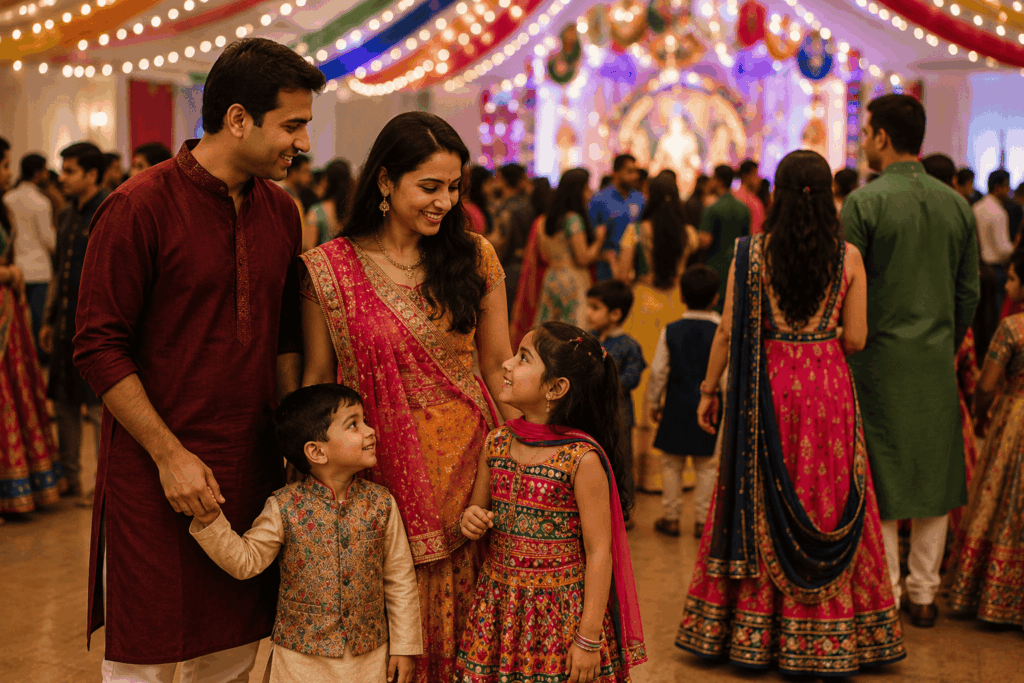
Many event listings say “families welcome.” That does not always mean the event stays genuinely child-friendly after 9 p.m.
As the evening progresses:
- Music usually gets louder.
- Programs often run behind schedule.
- Dance floors become crowded.
- Younger children get tired long before adults are ready to leave.
If you’re taking kids to Indian cultural events in Canada, pack more than you think you’ll need:
- A change of clothes.
- Water bottles.
- Familiar snacks.
- Headphones for sensitive children if the event is loud.
- Something small to keep them occupied during delays.
When you arrive, identify the washrooms and the nearest quiet exit. Some large events have family seating areas that aren’t heavily advertised, so it’s worth asking organizers in advance.
Parents who know these details ahead of time – whether they’ve been raising kids here for a decade or are figuring it out for the first time – usually enjoy the evening much more.
06 · BELONGING
Even Within the South Asian Community, You May Feel Like an Outsider Sometimes
This surprises a lot of people, no matter how long they’ve been in Canada.
A Hindi-speaking professional from Delhi can still feel slightly lost at a Punjabi-majority gathering. A Gujarati family may not understand every joke at a Tamil cultural evening. Someone from Bangalore may not know the Bollywood songs everyone else is singing. Even someone who’s been going to these events since childhood can walk into an unfamiliar community’s celebration and feel like a guest.
Being “South Asian” does not mean everyone shares the same language, traditions, or cultural references.
That insider-outsider feeling is normal. It doesn’t mean you don’t belong. It simply means the community is far more diverse than it first appears.
07 · CONNECTION
How Conversations Actually Start
Forget networking advice for a moment.
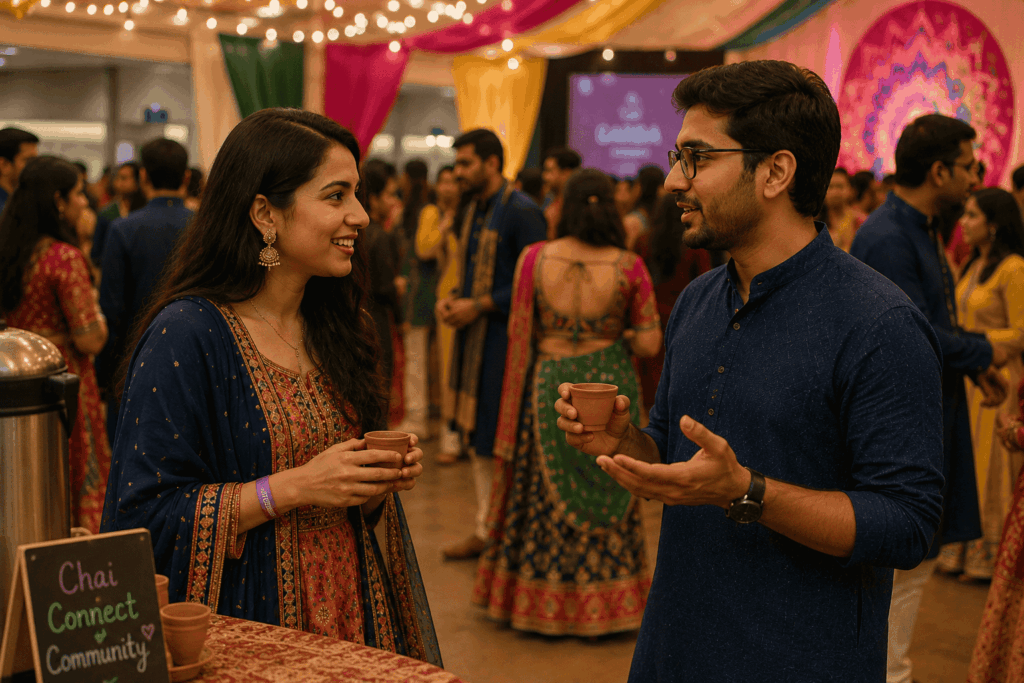
The conversations that lead to real friendships usually begin with ordinary observations:
- “Is this your first Garba here?”
- “Do you know where they’re serving chai?”
- “I just moved from Ahmedabad last year. How long have you been here?”
- “Have you been to this event before?”
People are often relieved when someone else breaks the ice first – whether they moved here recently or have simply never gotten around to it. You don’t need a perfect introduction. You only need a genuine one.
08 · PERSPECTIVE
The Moment Many People Misread
At some point during the evening, you’ll probably notice groups that seem deeply connected and think: “They already have their circle. I’m the outsider.”
What you don’t see is that many of those friendships started exactly where you’re standing now. Someone attended a festival alone. Someone else joined a volunteer team. Two families met while waiting for food. A casual conversation became a WhatsApp group, then weekend plans, then years of friendship.
Community in Canada is rarely inherited. It is built intentionally – and it stays that way even after you’ve been here for decades.
09 · GROWTH
Planning Indian Celebrations for All Ages Later On
One reason these events matter is that they slowly teach you how community celebrations work here.
Today you may be attending as a guest. A few years later, you may be helping organize a Diwali gathering, a Garba night, a charity fundraiser, or a family celebration of your own.
You begin noticing practical details that matter in Canada:
- Venue parking.
- Winter weather backups.
- Child-friendly timing.
- Dietary restrictions.
- Quiet spaces for seniors.
- Transportation for relatives who don’t drive.
Planning Indian celebrations for all ages here often requires more coordination than it did back home, but it also creates stronger community bonds over time – bonds that plenty of well-settled families are still actively building, year after year.
10 · MINDSET
This Is Not a Test
This may be the most important thing to remember, whether it’s your first event or your fiftieth.
You do not need to:
- Know every dance step.
- Speak the “right” language.
- Recognize every song.
- Arrive with a large friend group.
- Stay until midnight to prove you enjoyed yourself.
A South Asian event in Canada is not an exam measuring how Indian you are.
It is simply an opportunity to see where people gather, how the community feels, and which spaces make you feel comfortable enough to return.
11 · FINAL THOUGHTS
Final Thoughts
Most people don’t leave their first event with ten new friends.
They leave with something quieter but more important: the realization that community is actually accessible.
The next event feels easier. You recognize a few faces. Someone remembers your name. A short conversation turns into coffee, cricket, a festival invitation, or a weekend dinner.
That’s how life slowly rebuilds itself after moving countries – and how it keeps getting richer even long after the moving part is done.
So if you’re searching for South Asian events near me in Canada and wondering whether it’s worth going alone, the answer is usually yes.
Go with realistic expectations. Wear comfortable shoes. Ask about the dress code if it’s a religious event. Bring snacks if you’re taking children. Stay curious when conversations switch languages.
And if the evening feels a little awkward at first, remember: almost everyone who now looks perfectly settled – first-generation or second, newly arrived or decades in – once walked through those doors feeling exactly the same way.
Sometimes, the hardest part is simply showing up for the first festival. Everything else gets easier from there.
Frequently Asked Questions
Is it normal to feel out of place at a South Asian event, even as a South Asian person?
Yes. Language, regional background, and how long a community has been settled in Canada all shape how an event feels, so even lifelong attendees can feel like outsiders at an unfamiliar community’s celebration.
Is there a dress code for Garba or temple-run events?
It varies by venue. Some events discourage black clothing or expect traditional Indian attire, and a few follow colour themes for each Navratri night, so it’s worth checking the event page or messaging the organizer beforehand.
Is it okay to go to a South Asian event alone?
Yes. Many lasting friendships started exactly that way, with someone attending solo, joining a volunteer team, or striking up an ordinary conversation while waiting for food.
What should I bring if I’m taking kids to an Indian cultural event?
Pack a change of clothes, water, familiar snacks, headphones for sensitive children, and something to keep them occupied during delays, and locate the washrooms and a quiet exit when you arrive.
What’s the most practical thing to prepare for a big South Asian event?
Comfortable footwear. Keep a comfortable pair of shoes in your car and bring a light layer for the drive home, since most events involve hours of standing and walking across parking lots and hallways.
How do I find South Asian events near me in Canada?
Beyond a Google search, most events are shared through WhatsApp groups, local Instagram accounts, community Facebook groups, university alumni networks, and platforms like JalsoLife that bring South Asian events together in one place.
Before you head to your next event, there’s one thing that’s worth doing first: find where your local South Asian community actually gathers online. The best Garba nights, Diwali celebrations, cultural festivals, and community meetups rarely appear at the top of a Google search. They’re shared through WhatsApp groups, local Instagram accounts, community Facebook groups, university alumni networks, and platforms like JalsoLife that bring South Asian events together in one place. Once you discover those networks, you’ll stop relying on random searches and start hearing about events the same way everyone else does. It’s one of the simplest ways to become part of the community long before you walk through the venue doors.



 Previous Post

