

COMMUNITY & BELONGING · FIRST PERSON
“Everything’s going well.”
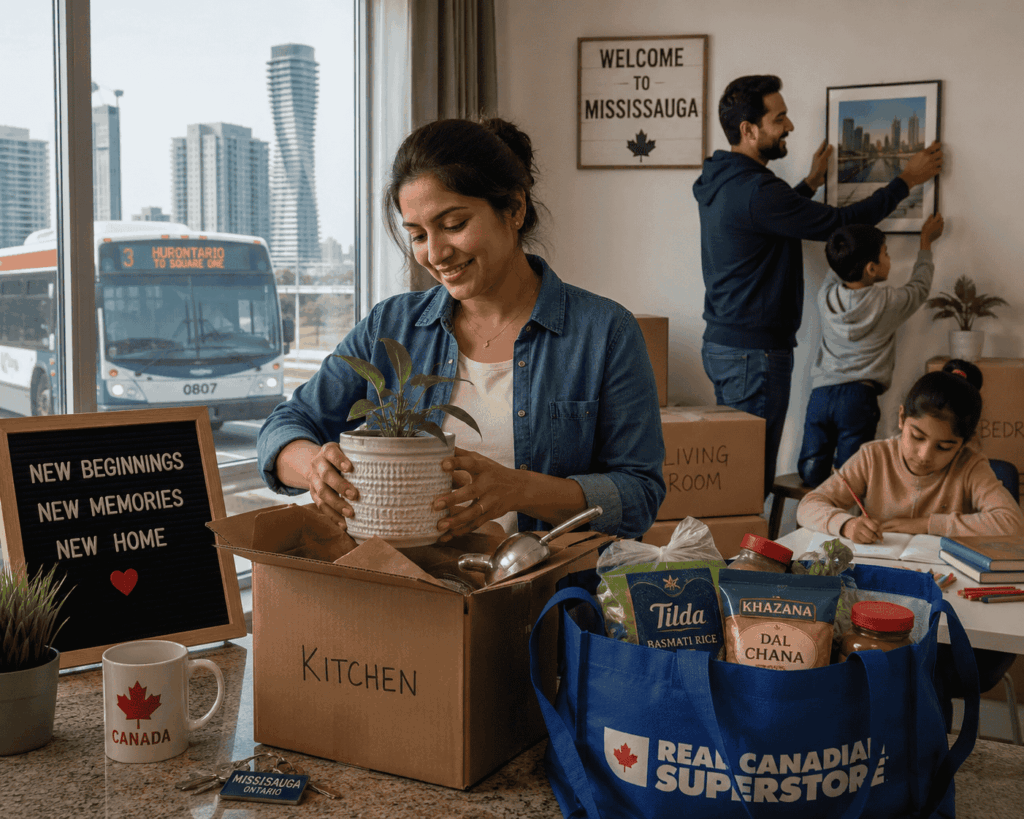
That’s what I told my parents three months after moving to Mississauga. And on paper, it was true. I had found an apartment, opened a bank account, figured out the GO Train schedule, and finally stopped relying on Google Maps every time I stepped outside.
Except every weekday ended the same way. I’d finish work, come home, make dinner, scroll through Instagram for an hour, maybe call my parents, and realize there wasn’t a single person I could text saying, “Chal, chai pe milte hain.” No one to complain to in Gujarati about the weather. No one to laugh with about the latest Bollywood gossip. No spontaneous plans. Just another quiet evening. That’s the part nobody really prepares you for.
Everyone tells you how to find a job, build credit, rent your first apartment, and survive your first Canadian winter. Very few people tell you that building a social life,especially one that feels familiar,can take just as much work. Back home, friendships happened naturally. Here, nobody is going to knock on your door and invite you into their circle. If you’re in that stage right now,comfortable on paper but still feeling disconnected in real life,this guide is for you.
01 · CONNECTION
Why Desi Friends Matter More Than You Think
Making South Asian friends isn’t about limiting yourself to one community. Most newcomers eventually build friendships with Canadians, coworkers, classmates, and people from all over the world. But there’s something comforting about spending time with people who already understand certain parts of your life without needing an explanation.
They know why your parents still expect a video call every weekend. They understand why Diwali isn’t just another holiday on the calendar. They don’t question why your family WhatsApp group has 247 unread messages or why cricket can somehow become a full-day commitment. Those shared experiences make life feel a little lighter.
But there’s another side to it that people rarely talk about. Community is practical. It’s the friend who tells you which Indian grocery store has the freshest vegetables this week. The one who recommends a trustworthy accountant before tax season. The person who forwards a job opening before it appears on LinkedIn. These aren’t things you’ll find in an immigration handbook. They come from people who have already walked the path you’re on.
02 · CULTURE SHIFT
Friendship in Canada Works Differently
One of the biggest mindset shifts after moving to Canada is realizing that friendships rarely happen by accident. People have demanding jobs, long commutes, family responsibilities, and carefully planned weekends. They’re friendly, but they’re also busy. That doesn’t mean they’re closed off,it simply means friendships usually grow through repeated interactions rather than instant chemistry.
Think about your closest friends back home. Chances are you didn’t become close after one conversation. You saw each other every day at school, college, work, or in your neighbourhood. Familiarity did most of the work. The same thing happens here.
The first Garba night might only end with a smile and a quick introduction. The third event becomes a longer conversation. By the fifth time you see each other, someone says, “We’re grabbing chai after this,want to join?” That’s usually how friendships begin in Canada: slowly, quietly, and through consistency.
03 · COMMUNITY
Where Your Community Is Already Waiting
One mistake many newcomers make is assuming they need to “find” the South Asian community. The truth is, it already exists. You simply need to start showing up where it naturally gathers.
Community Events
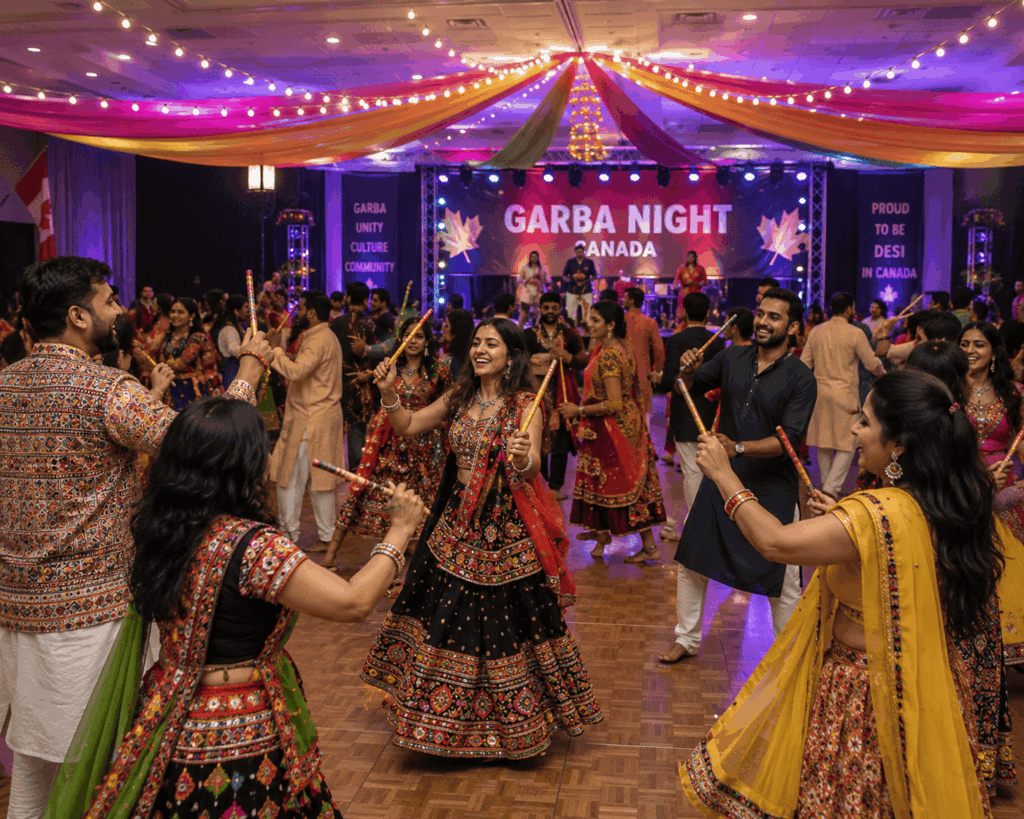
Garba nights, Diwali melas, Vaisakhi celebrations, Eid festivals, Holi parties, food festivals, concerts, and cultural association gatherings aren’t just celebrations,they’re where relationships begin. People attend these events to relax, eat good food, dance, and reconnect with their culture. That makes conversations feel much more natural than they would at a formal networking event.
Don’t put pressure on yourself to leave your first event with five new phone numbers. Instead, focus on becoming a familiar face. Over time, you’ll start recognizing the same people, and they’ll recognize you too.
Online Communities
Long before you attend your next event, chances are your city already has active Facebook groups, WhatsApp communities, Instagram pages, and Telegram channels dedicated to South Asians. Some are broad, while others are specific to Gujarati, Punjabi, Tamil, Bengali, or regional communities.
Spend a little time browsing before jumping into conversations. You’ll quickly discover event announcements, cricket matches, volunteer opportunities, apartment listings, and casual meetups. Sometimes, all it takes is replying to someone who’s also new to the city.
Campus & Young Professional Networks
If you’re studying or have recently started your career, you already have one advantage,you’re surrounded by people going through similar transitions. Universities regularly organize South Asian cultural nights, movie screenings, dance competitions, and student mixers. Many workplaces also have employee resource groups or multicultural events that can lead to genuine friendships outside office hours.
Faith & Community Spaces
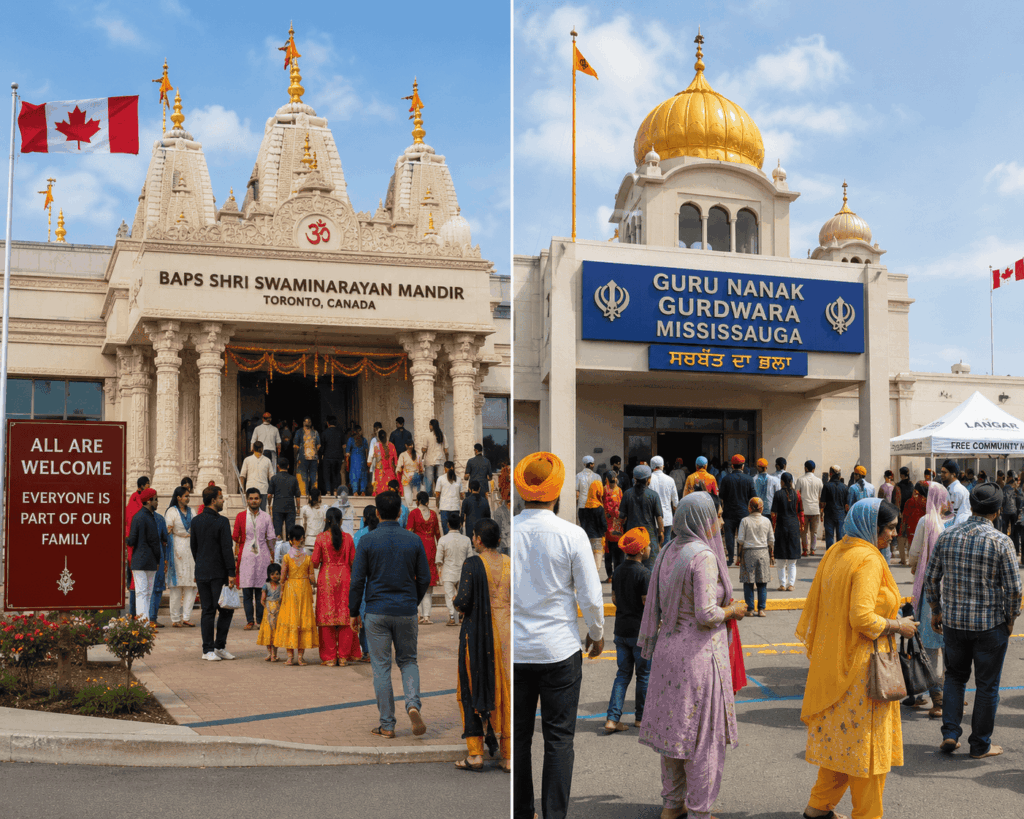
Gurudwaras, temples, mosques, and community centres are much more than places of worship. They’re places where families gather, volunteers work together, festivals are celebrated, and newcomers often find their first local support system. Even if you’re not particularly religious, these spaces frequently host community meals, cultural programs, language classes, and volunteer opportunities that naturally bring people together.
Shared Interests
Some of the strongest friendships begin because people enjoy doing the same thing every weekend. Cricket leagues, badminton clubs, dance classes, hiking groups, photography walks, book clubs, and cooking workshops all create opportunities to meet people without the pressure of making conversation from scratch. You don’t need to be an expert. You just need to keep showing up.
04 · MISTAKES
The Mistakes Almost Every Newcomer Makes
Most people expect one great event to magically solve their loneliness. It rarely works that way. Some wait for invitations instead of extending one themselves. Others attend a single community gathering, don’t instantly connect with anyone, and decide it wasn’t worth trying again. Many stick only to people from the exact same hometown or language group, unintentionally missing friendships with people who share similar experiences even if they speak a different language.
The biggest mistake, though, is assuming everyone else already has their friend circle figured out. They usually don’t. Many people smiling confidently at community events were once standing exactly where you are now, wondering how to start a conversation.
05 · JOURNEY
What Changed Everything for Me
At some point, I stopped trying to “make friends” and started trying to become familiar. I attended the same events. Visited the same cafés. Volunteered at community festivals. Joined the same sports groups.
Slowly, strangers became acquaintances. Acquaintances became people who waved when they saw me. Then someone invited me for chai. A few months later, I was the one inviting someone else.
Looking back, I can’t point to one life-changing conversation. Instead, I remember dozens of small moments that quietly added up until Canada stopped feeling unfamiliar.

06 · DISCOVERY
Finding Events Shouldn’t Feel Like Another Job
One challenge many newcomers face isn’t deciding to attend events,it’s simply knowing where to find them. One Garba night is announced only on Instagram. A cricket tournament appears in a WhatsApp group. A cultural association posts on Facebook. Another event never makes it beyond word of mouth. Keeping up can feel exhausting.
That’s where platforms like JalsoLife become genuinely useful. Instead of searching across multiple websites and social media pages, you can discover Gujarati and Punjabi events happening across Canada and the US,from Garba nights and community festivals to concerts, cultural programs, family gatherings, and local meetups. It won’t make friends for you. But it helps you consistently show up where friendships have the best chance of beginning.
07 · CHALLENGE
Your 30-Day Friendship Challenge
Instead of trying to transform your social life overnight, give yourself one month.
Week 1 – Build Your Community Map
- Join one Facebook or WhatsApp group for your city.
- Follow local South Asian event pages on Instagram.
- Save two upcoming community events to your calendar.
Week 2 – Show Up
- Attend one cultural event.
- Introduce yourself to at least one new person.
- Stay for chai or food instead of leaving immediately after the event.
Week 3 – Become a Familiar Face
- Visit a Gurudwara, temple, mosque, or community centre.
- Try a cricket, badminton, dance, or hobby group.
- Volunteer for a local community event.
Week 4 – Make the First Move
- Invite someone for chai or coffee.
- Attend another community gathering.
- Exchange contact details with someone you’ve enjoyed talking to.
- Plan your next event before the month ends.
Frequently Asked Questions
How long does it usually take to build a friend circle in Canada?
For many newcomers, meaningful friendships develop over several months rather than a few weeks. The biggest difference isn’t confidence,it’s consistency.
I’m shy. Will this still work?
Absolutely. You don’t need to be the loudest person in the room. Showing up regularly often matters much more than being outgoing.
Should I only focus on making South Asian friends?
Not at all. Many people naturally build diverse friend circles over time. South Asian friendships simply provide an easier cultural starting point because there’s less explaining and more understanding.
What if my first event feels awkward?
That’s completely normal. Community is built through repeated interactions, not one perfect evening.
Home Starts With One Familiar Face
Building a community in Canada isn’t about collecting dozens of contacts or forcing conversations with strangers. It’s about showing up often enough that strangers slowly become familiar faces. One event becomes two. One conversation becomes a chai invitation. One friendship introduces you to another. Before you realize it, the city that once felt unfamiliar starts feeling like somewhere you belong.
That’s how most Desi communities across Canada have grown for decades,not through one big moment, but through hundreds of small ones, repeated over time. Your first friend might not change your life overnight. But they might introduce you to the people who do.






 Previous Post

