

NEWCOMER LIFE · FIRST PERSON
“Is this the same dal my mom uses?”
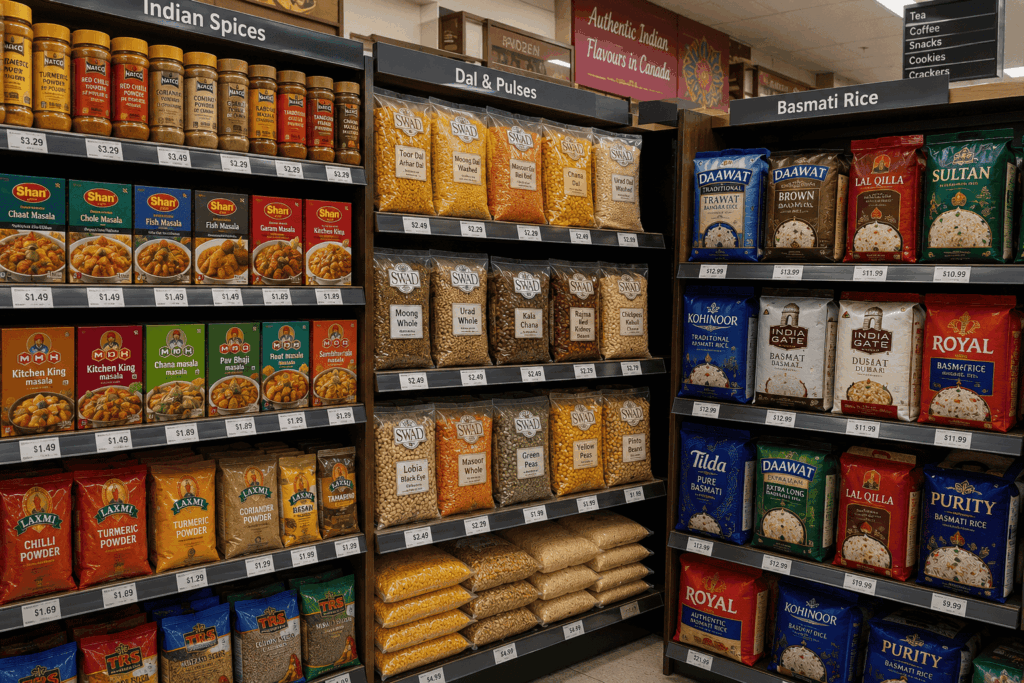
I landed in Toronto in November with two suitcases, a rice cooker my mom insisted I bring, and a fully formed plan for my first year in Canada. That plan lasted about nine days, right up until the moment I stood in a No Frills aisle, staring at six different brands of “basmati rice,” having a small, silent breakdown over how expensive toor dal was.
Nobody warns you about that part. They warn you about the cold. They don’t warn you about standing in a grocery store aisle, 11,000 kilometers from home, googling “is this the same dal my mom uses.”
This is the article I wish someone had sent me before I booked my flight. Not a checklist. Not a listicle of “top 10 tips.” The actual, slightly messy truth about building a life here, from someone who’s already done the crying-in-the-Walmart-parking-lot phase, so you can skip straight to the good part.
01 · SETTLING IN
The First Month Is Not Cute. It’s Just Admin.
Let’s kill the fantasy right now: your first few weeks in Canada will not feel like a movie montage. It will feel like a to-do list that never ends.
SIN number. Bank account. Health card (and yes, depending where you land, there’s a waiting period where you’re technically uninsured, get travel insurance, don’t skip this). Phone plan. An address that isn’t a hotel. It’s not romantic. It’s paperwork with jet lag.
And here’s the part that actually matters: you are allowed to feel completely flattened during this stretch. Not sad, necessarily, just low-battery, in a way that surprises you. That’s not a sign you made the wrong call. That’s just what recalibrating your entire nervous system to a new country, new climate, and new grocery store logic actually costs.
Give yourself the two to three weeks. You’ll get your spark back. Promise.

02 · CULTURE SHOCK
The Small Talk Will Mess With Your Head
You know how to talk to people. You’ve been doing it your whole life. And then you get here and suddenly every conversation feels like you’re playing a game with rules nobody explained.
“How are you?” is not a question. It’s a hello. Answer with “good, you?” and keep walking, anything more and you’ll get a look like you just overshared to a stranger, which, fair, you kind of did.
Asking someone their salary, their weight, or the classic “beta, when are you having kids”, completely normal at your masi’s dinner table, an actual landmine here. And the silence from neighbours who smile and say “good morning” every single day for six months but never once ask you inside? That’s not them being cold. That’s just… the default setting here. It took me longer than I want to admit to stop taking it personally.
03 · COMMUNITY
The Real Talk About “Community” Here
Okay. Real talk, because this is the part most articles skip entirely.
You will walk into your first Diwali mela or garba night expecting instant belonging, everyone looks like you, everyone knows the songs, surely this is your people, right? And sometimes it is. But sometimes you’ll clock a subtle divide between families who’ve been here since the 90s and people who landed two years ago. Sometimes the Gujarati crowd and the Punjabi crowd are standing on opposite sides of the same hall, not out of any conflict, just because the community here isn’t actually one big monolith, it’s a hundred smaller ones that happen to share a continent of origin.
That’s not a reason to give up on it. It’s a reason to stop expecting instant magic and start showing up consistently instead. The friendships that actually stick came from people I kept running into, same temple, same weekend cricket group, same event three months in a row, not from one big perfect night out.
04 · CITY
Where You Land Actually Shapes Your Whole First Year
Nobody tells you this before you pick a city, but where you land changes everything, not just your rent, but how fast you find your people.
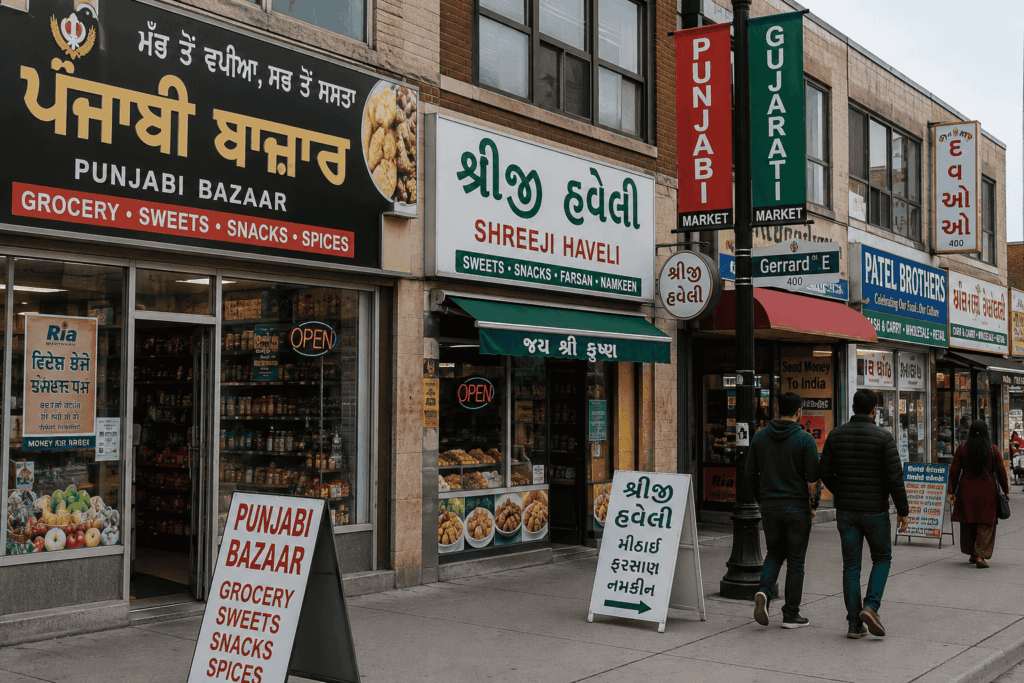
Places like Brampton, Mississauga, and parts of Oakville and Scarborough have such a dense Punjabi and Gujarati population that you’ll spot a gurudwara or a Gujarati Samaj chapter within a twenty-minute drive of almost anywhere. Surrey and Abbotsford in BC run entire commercial strips in Punjabi, signage, shopkeepers, the whole thing. Calgary and Edmonton are quieter on the South Asian infrastructure front, but they’re growing fast, and a lot of newcomers find the lower cost of living and less competitive job market makes the trade-off worth it.
Here’s the honest tension nobody puts on a brochure: the cities where you’ll find “your people” the fastest are often the cities where rent is highest and the job market is most competitive. The quieter cities give you an easier financial runway but a slower road to community. I don’t think there’s a universally correct answer here, it genuinely depends on what you’re willing to trade for what, in year one specifically. Just go in knowing it’s a trade-off, not a flaw in whichever city you pick.
05 · SUPPORT
The Free Help Almost Nobody Actually Uses
This one genuinely surprised me. There are entire government-funded settlement agencies, COSTI, Achēv, and local Immigrant Services Societies across most provinces, offering completely free resume help tailored to how Canadian hiring actually works, mentorship matching in your specific field, and settlement counselling on everything from tenant rights to enrolling your kids in school.
Free. Not “free trial.” Not “free if you sign up for something else.” Genuinely funded so newcomers don’t have to figure this all out alone.
And almost nobody I know used them in their first year, myself included, mostly because it felt like admitting we needed help, or we just didn’t know they existed. Settlement.org is a solid starting point if you’re in Ontario; most provinces have their own equivalent directory. Go once, even if you think you’ve got it handled. You probably don’t need all of it. But you’ll be surprised what one conversation with someone who’s guided a hundred newcomers through the exact same maze can save you.
06 · GROCERY
Yes, You Need to Find Your Grocery Store. It’s a Whole Journey.
Nobody prepares you for how emotional finding real, decent Indian groceries becomes.
Big chains like Patel Brothers (huge across the U.S.) or your city’s local Indian supermarket will have your Haldiram’s, your fresh methi, your specific masala brand from home. But don’t sleep on mainstream spots either, No Frills, FreshCo, and Walmart locations in South Asian-heavy neighborhoods often have surprisingly solid basmati and ghee sections, sometimes cheaper than the specialty store.
Real talk: the exact same box of masala can cost 30% more at one store versus another, ten minutes away. Do the trial runs. You’ll find your spot. And when you do, it will feel disproportionately, embarrassingly emotional. Let it.
07 · CREDIT
Building Credit: The Least Glamorous, Most Important Thing You’ll Do This Year
Nobody’s putting this on a vision board, but hear me out: this is the thing that quietly determines whether your first apartment costs you a $500 deposit or a $3,000 one.
You arrive with zero credit history, no matter how responsible you were with money back home. Canada doesn’t see that. So:
Get a secured credit card in your first month, most big banks have newcomer versions where you put down a deposit that becomes your limit. Use it for small stuff, like groceries. Pay it off in full, every month, no exceptions. Don’t apply for five things at once. Check your Equifax or TransUnion report around the 6-month mark to make sure it’s building right.
It’s boring. It’s also the difference between an easy year two and a frustrating one. Do it now, thank yourself later.
08 · WINTER
Winter Doesn’t Just Test Your Body. It Tests Your Mood.
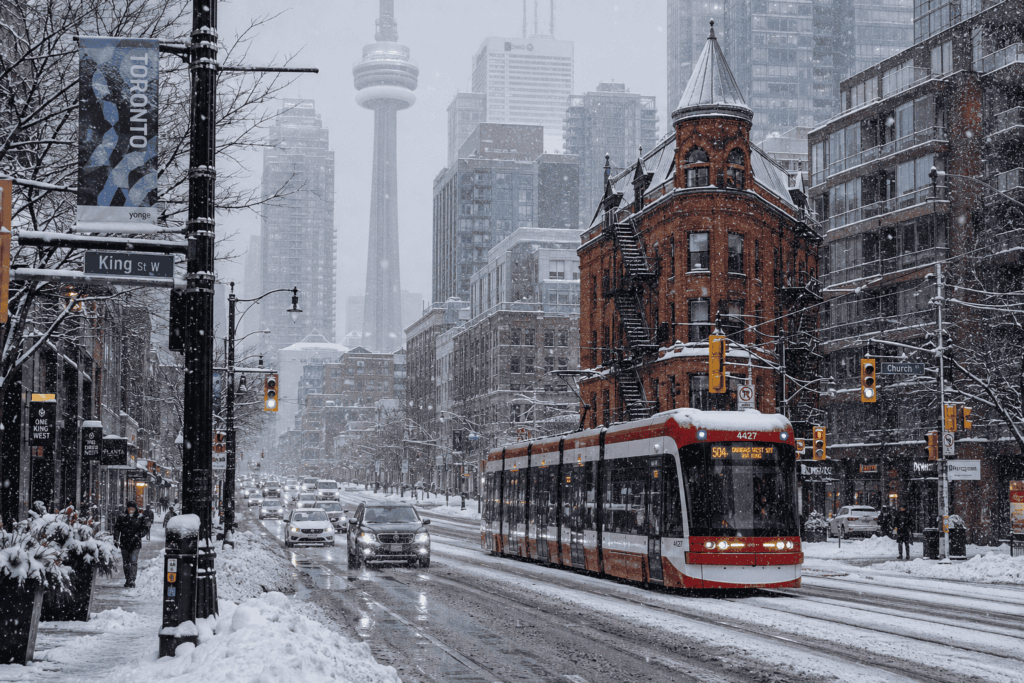
Everyone tells you it’s cold. Nobody tells you the sun disappears by 4:30 PM in December in a lot of Canadian cities, and how much that actually messes with your energy.
This is real, not dramatics: seasonal low mood in the darkest winter months is genuinely common here. A light therapy lamp helps. Staying social even when every part of you wants to hibernate helps more. And by February, even people who genuinely love snow are over it. If you’re over it too, that’s not weakness. That’s just… February.
09 · MONEY
The Money Talk Your Family Won’t Have With You
Sending money home is often non-negotiable, emotionally, and I’m not here to tell you not to. But a lot of newcomers send aggressively in year one, before their own footing is stable, and end up stretched thin in ways that stress everyone out more in the long run.
A few things worth doing early instead of “later”: open a TFSA, even with small amounts, it compounds more than you’d expect. Read the fine print before financing furniture or a car on “0% interest,” because the fees are often hiding somewhere else. And understand that not having credit history costs you real money, bigger deposits, higher insurance, which loops right back to why the boring credit-building stuff above actually matters.
Not having credit history costs you real money, bigger deposits, higher insurance, which loops right back to why the boring credit-building stuff actually matters.
10 · FRIENDSHIP
The Friendships That Actually Last
Here’s the thing nobody tells you about making friends as an adult in a new country: proximity does none of the work for you anymore. Back home, family and neighbourhoods did that job. Here, you have to actually choose it, on purpose, repeatedly.
The friendships that stuck for me weren’t from one incredible night out, they came from being the person who texted “let’s do this again” after the first hangout, instead of waiting for someone else to. From showing up to the same spaces enough times that people started expecting me there. And honestly? Some of my closest people here aren’t even Gujarati, they’re Punjabi, Sri Lankan, Bangladeshi, bonded by the very specific, very shared experience of building a whole life from scratch, far from where either of us grew up.
11 · GETTING AROUND
Okay, Let’s Talk About the Car Thing
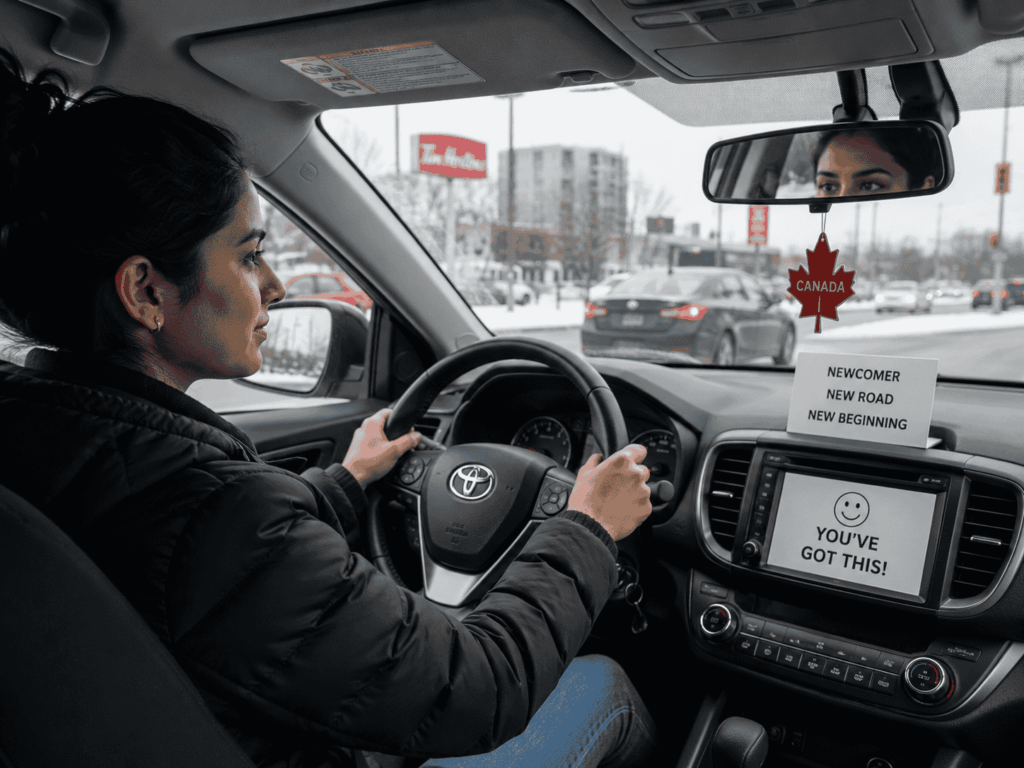
I resisted buying a car for almost eight months. Partly the cost, partly just the habit of relying on transit back home. Big mistake, in hindsight.
Unless you’ve landed somewhere squarely downtown, central Toronto, Vancouver, Montreal, public transit here just isn’t built around the errands of an actual South Asian household. Your favourite grocery store, the temple, your kid’s tutoring, none of it is guaranteed to sit near a direct bus route. The time you save once you have a car is bigger than most people budget for when they’re weighing the cost.
One more thing worth doing early: your Indian license is usually only valid for a limited window here, and it varies by province, so don’t leave converting it until the last minute. Road test wait times in busy cities can stretch out for months, and you don’t want to be stuck without wheels and without a license at the same time.
12 · CHECKLIST
Your Newcomer Checklist, Saved for Later
Bookmark this part. Screenshot it. Send it to your cousin who’s landing next month. This is the stuff that actually needs doing, roughly in the order it needs doing:
- Apply for your SIN
- Open a newcomer bank account
- Apply for provincial health coverage; get travel insurance to cover any waiting period
- Get a secured credit card and set up autopay for full balance
- Set up an international money transfer account
- Register with a free settlement agency in your city
- Locate your nearest Indian grocery store and one mainstream store with a good South Asian aisle
- Join at least one local Facebook or community group for your city
- Attend one South Asian community event within your first two months
- Begin the process of converting your driving license
- Check your credit report after 6 months
Nothing on this list is glamorous. None of it will make a good Instagram story. But every single item is something that either saves you money, saves you time, or gets you one step closer to feeling like a person here instead of a paperwork pile with a heartbeat. Do it in order if you can. Do it out of order if that’s what works. Just do it.
13 · DISCOVERY
The App I Wish Existed When I Landed
Here’s the thing about finding events here, for the first few months, you’re basically relying on luck. A friend tags you in a WhatsApp forward. Someone’s cousin mentions a mela happening “somewhere in Brampton, I think, this weekend.” You find out about the good Diwali function the day after it happened.
That’s basically why JalsoLife exists. It’s an event discovery platform built specifically for us, Gujarati and Punjabi families across Canada and the US looking for the actual events happening near them, not the three biggest, most commercialized ones that show up on a general Google search. Garba nights, gurudwara programs, cultural association mixers, kids’ festivals, small community gatherings that never make it onto mainstream event sites, the kind of stuff that used to only travel through group chats you weren’t in yet.
I’m not going to pretend it replaces the slow work of actually building community, nothing does that. But it does fix the very first, very annoying problem: just knowing what’s happening and when. Which, in your first year especially, is half the battle.
The One Thing to Actually Do
Skip the vision board. Skip the five-year plan. This week, open JalsoLife, find one South Asian event happening near you, and RSVP, not to network, not because you “should,” just to be in a room where the context doesn’t need explaining. That one evening will do more for how settled you feel than another solo grocery run ever will.
How long until it actually feels like home? Most people say somewhere around 12-18 months. It’s not linear. Some weeks it clicks, some weeks it doesn’t. Both are normal.
Frequently Asked Questions
How long until it actually feels like home?
Most people say somewhere around 12-18 months. It’s not linear, some weeks it clicks, some weeks it doesn’t. Both are normal.
Do I really need a car?
Outside downtown cores, yes, probably sooner than you think, especially once your closest Indian grocery store is a 20-minute drive with no direct bus.
Is it normal to still feel homesick years in?
Completely. It tends to resurface around specific festivals or family milestones you’re missing, not on any predictable schedule.
How do I actually find events near me?
Cultural association pages, gurudwara and temple bulletin boards, and event discovery platforms tend to surface way more than a general search does, general search mostly just shows you the three biggest, most commercialized events in your city.
Should I get involved with cultural associations even if I’m not that religious?
Yes, Gujarati Samaj-type organizations and similar groups usually run far more than religious programming. Networking nights, festivals, family events, genuinely one of the fastest on-ramps to your first real social circle here.







 Previous Post

